 HereFishyFishy
The best bait for steelhead in Ontario
Ontario steelhead are float fished with eggs, or something that looks like one. This article covers roe bags, beads, worms and flies, which to tie on for the water in front of you, and the rules that apply to bait here.
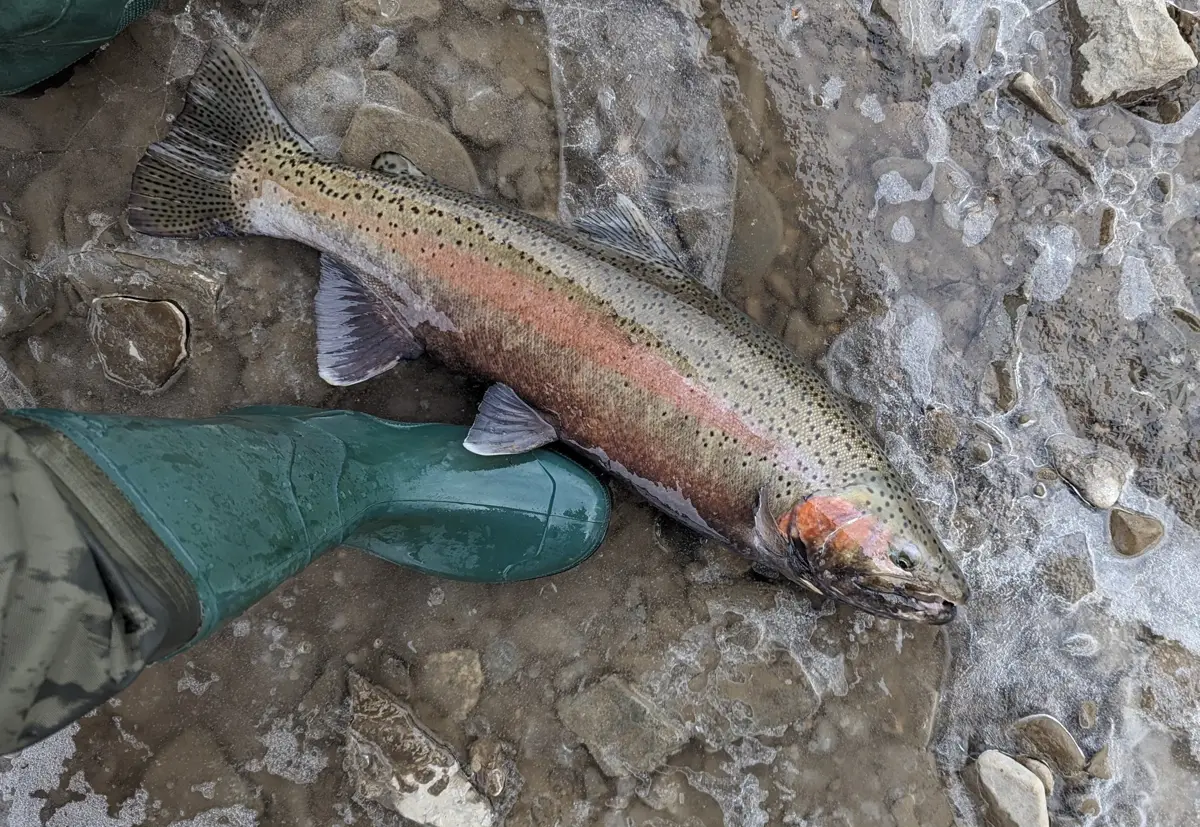
Start with a roe bag. A soft or hard bead is the next best thing, and it lasts longer. Carry a pink worm as a change. Match the bait to the water: bigger and brighter when the river is coloured, smaller and more natural when it's low and clear.
What bait do steelhead take in Ontario rivers?
Steelhead come into the rivers in the fall behind the salmon, and they eat the salmon's eggs. That's why almost every steelhead bait in Ontario is an egg or looks like one. A drifting egg is easy food, and steelhead take one almost by reflex, even when they aren't feeding hard.
Four baits cover nearly every day on the water.
| Bait | Why it works | When to use it |
|---|---|---|
| Roe bag | Real cured eggs: the look, the smell and the milk they give off in the water | Any day. The one to start with |
| Bead | A plastic egg that never washes out, and you can match its size and colour exactly | Clear water, cold water, and when you're running through roe |
| Worm | Plastic or real worms drift naturally and look different from all the eggs fish have seen | Spring, after rain, and on pools that have been pounded with roe |
| Fly | Egg patterns, nymphs and streamers such as a Woolly Bugger | Fly gear, and the few reaches that allow artificial lures only |

How do you fish roe bags for steelhead?
A roe bag is a few cured salmon or trout eggs tied in a small square of mesh. It's the standard steelhead bait on Ontario rivers, and the best one to start with. The eggs bleed scent and a milky trail as they drift, which nothing artificial copies.
- Size. Keep them small. A typical bag is the size of a dime to a penny, about three to six salmon eggs. Go up to a nickel in big or muddy water, and down to a dime or smaller when the river is low and clear.
- Mesh colour. The mesh is the colour the fish sees. Peach, pink, chartreuse, orange and white are the common ones. Natural shades suit clear water and early in the fall; hot colours suit coloured water and later in the season.
- Hook. One small hook through the bag, at the top where the mesh is tied off. I fish size 10.
- Swap often. A bag that has washed out to white has lost the scent that made it work. Put on a fresh one.
Tackle shops sell cured roe and tied bags in season. You can't buy eggs from another angler, though. In Ontario only commercial licence holders can sell fish eggs.
Tying your own
If you keep a salmon or trout, its eggs make the best bags. I tie my own from a salmon I kept last year. I cured the roe with salt, sugar and borax, plus a little Pautzke red for colour. The usual method, from Ontario OUT of DOORS:
- Spoon the eggs off the skein onto paper towel so they separate.
- Dust them with borax until they're coated, and let them dry in the fridge for a day or two.
- Put a dime-sized cluster in the middle of a 3 or 4 inch square of mesh, gather the corners, and wrap the neck with about six turns of stretchy bag thread.
- Trim the extra mesh and thread. Store the bags in borax: they keep for months in the fridge and much longer in the freezer.
Soft beads or hard beads?
A bead is a plastic egg. It lasts all day, it's cheap, and it comes in exact sizes and colours, so you can match the eggs in the river or stand out from them. It's the bait most Ontario anglers switch to when roe isn't working, and many start with it.
- Soft beads feel like a real egg, so a steelhead holds on a moment longer. Some float close to neutral in the current, as a real egg does. Pink suits coloured water; peach and natural shades suit clear water.
- Hard beads last longer and come in more finishes. They're a top producer, especially in clear water. Chartreuse and orange are the colours to start with. In clearer water my go-to is an 8 mm translucent hard bead.
Size: 8 to 12 mm covers most days. Go smaller in low, clear water and larger in coloured water.
Rigging: pin the bead on the leader 1 to 2 inches above a bare hook, with a peg or a bobber stop. The fish takes the bead, and the hook sits just behind it, in the corner of the mouth. Don't thread the hook through the bead.
Colour and clarity: in coloured water, use opaque, bright or glow beads that show up. In clear water, use translucent, natural shades that let light through, like a real egg.

When should you use worms for steelhead?
Worms are the bait most people forget. A plastic or real worm drifted under a float catches steelhead, and it's a good change on a pool where every angler has run roe all morning.
- Plastic worms: 3 to 4 inches, threaded on the hook so they drift straight. Pink and red are the usual colours for stained water, natural shades for clear.
- Nightcrawlers: half or whole, best in spring and after rain, when worms wash into the river.
- Worms in May. I see trout and steelhead go after worms in May, especially after some rain. Young trout heading out to the lake take them too, and will swallow a worm. Set the hook quickly so they don't, and release them in the water.

What about flies?
On fly gear, the same egg logic holds. A small mix covers most of the season:
- Egg patterns: Glo Bug, Sucker Spawn and bead-head egg flies, fished like a bead.
- Nymphs: stonefly and general nymphs, close to the bottom, for fish that have seen too many eggs.
- Streamers: for fresh, aggressive fish in the fall and drop-backs in spring, which will chase.
- Woolly Buggers: #6 to 10 in purple, black or olive. Swing one on a fly rod, or hang it under a float just off the bottom, like a bead. It's a good change for fish that have seen too many eggs.
Flies are also what you fish on reaches that allow artificial lures only, where roe and worms aren't allowed.

How do you match the bait to the water?
Water clarity decides more than the bait itself. After rain the river rises and colours up, and fresh fish move. As it drops and clears over the next few days, the fishing usually gets better, and the bait should get smaller and more natural with it.
| Water | Size | Colours | Leader |
|---|---|---|---|
| Coloured or high | Larger: nickel-sized bags, 12 mm beads | Pink, chartreuse, orange; opaque or glow | Can go heavier |
| Normal | Nickel-sized bags, 10 mm beads | Pink, peach, natural | Standard |
| Low and clear | Dime-sized or smaller, 8 mm beads | Peach, white, light yellow; translucent | Lighter |
Cold water changes the size more than the colour. When the river is near freezing, steelhead won't move far for a bait, so go small and get it right down to them. The winter steelhead article covers fishing slow and deep.
Carry a few options. On a November day on the Credit, where I fished three spots before I found fish, I rotated through peach and chartreuse roe bags, a pink steelhead worm and a single peach soft bead. If nothing happens in a spot, move to new water first. Changing colour or bait helps most on a pool you know holds fish that have stopped taking.
Does bait change through the season?
- Fall (October and November): fresh fish, lots of salmon eggs in the river. Roe and beads in egg colours are hard to beat. Natural shades early, hotter colours as the water colours up later.
- Winter (December to February): smaller baits, fished slower and deeper. Beads hold up better than roe in cold water.
- Spring (March to April): rain and snowmelt wash worms into the rivers, so worms come into their own. Fish that have spawned and are dropping back to the lake will chase a little more. Leave fish on the gravel spawning beds alone, and fish the deeper water below them.
For which rivers turn on when, see when steelhead run in Ontario.

What are the bait rules in Ontario?
- Some reaches allow artificial lures only. No roe and no worms there. The Forks of the Credit and the Fergus and Elora stretches of the Grand are examples. Check your reach in the regulations, or pick it in the conditions tool, which lists the gear rules for each reach.
- Don't dump leftover bait. It's illegal to leave bait, including fish eggs, in the water or within 30 metres of it. Take your old roe home.
- Don't buy or sell eggs from other anglers. Only commercial licence holders can sell fish eggs.
- Baitfish and leeches stay in their zone. The GTA rivers are in the Southern Bait Management Zone, and baitfish and leeches can't be moved in or out of it, with a few exceptions.
These come from the 2026 Ontario Fishing Regulations Summary. Check the current version before you go.
What's in my bait box
This is what I carry for steelhead on GTA rivers. The full rod, reel and line setup is in the winter steelhead article.
| Roe bags | Peach and chartreuse, tied from my own cured salmon roe |
| Beads | An 8 mm translucent hard bead for clearer water, and a single peach soft bead |
| Worm | Pink steelhead worm |
| Hooks | Size 10 Raven Sedge |
| Leader | 6 lb Drennan fluorocarbon |
Check the water before you pick a bait
Live flow and water temperature for Ontario steelhead rivers, with the open reaches and best access spots for today, plus the bait to start with.
Find today's best spotRead next
Bait only works where the fish are. See where steelhead hold in a river, late fall and winter steelhead and when steelhead run in Ontario.
Common questions
What is the best bait for steelhead in Ontario?
A roe bag: a few cured salmon or trout eggs tied in a small square of mesh, drifted under a float near the bottom. Beads are the next best choice and last longer, and a pink worm is a good change on pools that have seen a lot of roe.
What colour roe bag or bead should I use for steelhead?
Match the colour to the water. In coloured or high water use bright, opaque colours such as pink, chartreuse and orange. In normal water pink, peach and natural shades. In low, clear water use peach, white or light yellow, and translucent beads.
What size bead is best for steelhead?
8 to 12 mm covers most days. Use about 12 mm in coloured water, 10 mm in normal water and 8 mm in low, clear water. Peg the bead 1 to 2 inches above a bare hook.
Do worms work for steelhead?
Yes. Plastic worms of 3 to 4 inches in pink or red, or a piece of nightcrawler, drifted under a float. Worms are best in spring and after rain, and they are a good change on a pool where everyone has been fishing roe.
Can you use roe for steelhead everywhere in Ontario?
No. Some reaches, such as the Forks of the Credit and the Fergus and Elora stretches of the Grand, allow artificial lures only, so roe and worms are not allowed there. It is also illegal to leave bait, including fish eggs, in or within 30 metres of the water. Check your reach in the current Ontario fishing regulations.
Sources
- Ontario Ministry of Natural Resources: 2026 Fishing Regulations Summary (bait, pp. 14 and 20 to 22)
- New York DEC: Steelhead fishing on the Lake Ontario tributaries
- Ontario OUT of DOORS: Make your own roe bags (Jason Bain, 2024)
- Ontario OUT of DOORS: Steelhead 101 (Gord Ellis, 2024)
- Great Lakes Angler: Soft beads and hybrids for steelhead (Matt Straw, 2020)
- Pautzke: Learn to tie spawn like a Canadian (Josh Choronzey, 2014)